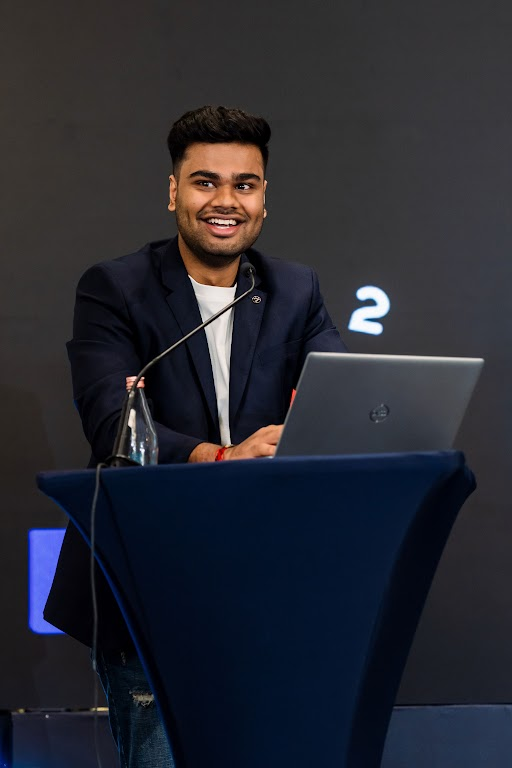
Growing up, I watched my dad thrive in his career, and ambition was a constant theme in our household conversations. Naturally, professional success became a priority for me—though, ironically, my grades told a different story, often resembling phone numbers, especially in the sciences.
In college, this drive only deepened. I found myself obsessively consuming Nikhil Kamath’s podcasts, sometimes even on the eve of my final semester exams. I’m still unsure whether it’s just a passing fascination or something more profound, but the content I absorbed always fueled my desire to build something of my own.
Since joining full-time, I have immersed myself in everything possible—sales development, solution consulting, hunting, and more. Within my first month, I had the opportunity to meet CXOs of Fortune 500 companies.
There was this one time, where I managed to sneak in a meeting with the sales head of the world’s biggest chocolate brand (you all know the one). After talking to him, we got to know his previous business experiences, and we wondered how we can turn things around for him this time. From there, my enterprise sales lead and I got into intense brainstorming. After some strategic flattery and carefully chosen words, we somehow managed to turn things around and find an opportunity with his new organization. Sales truly is part strategy, part therapy!
This exposure made me question my own aspirations: What do I truly want to do? What is important to me? Why do I aspire to do what I do? While I am still on that journey of self-discovery, one thing has remained clear—entrepreneurship has always been my goal.
Finding a pseudo-entrepreneurial role has been crucial for me, and I have managed to shape my sales development role into one. I believe that to be a successful founder, there are a few essential skills one must possess (based on my limited experience). First, the ability to sell—no founder who struggles to sell their business has scaled, regardless of their degrees. Second, the ability to think big—why take on the risks and opportunity costs of being a founder if not to solve a significant problem? Third, the confidence to pursue ideas that may initially seem absurd—every major startup today started as what seemed like a ridiculous idea. Flipkart began by selling books, Zomato was just a menu database, and Zepto started as a free delivery service for their locality during COVID-19.
In my time at Bizom, I have had the chance to develop all these skills. Selling has been at the core of my role, whether it’s pitching to enterprise clients or building relationships. Thinking big has become second nature—despite the high cost of replacing enterprise solutions, we have created opportunities in multi-billion-dollar businesses. And confidence? I once explained to the CIO of a major company how they could drive retailer app adoption through WhatsApp chatbots—an idea he found compelling enough to consider Bizom as a solution provider.
Funnily enough, my exposure has known no bounds. Case in point: exactly one week before my own graduation ceremony, I found myself back at PES University—not as a student, but as a recruiter. That’s right, I returned to my own stomping grounds to convince a fresh batch of sales junkies to take up what I do… before I had even officially graduated myself. Talk about premature nostalgia—one moment, I was a student dodging placement interviews, and the next, I was the guy conducting them. Life moves fast.
Bizom has been an entrepreneurial breeding ground for me, a place that (for all the right reasons) lacks a rigid job description. It has allowed me to explore, take risks, and build a foundation for the future I envision. And for that, I am incredibly grateful!